Florida State University Search

Environmental Health & Safety
FSU Laboratory Coat Program
Supporting Safety, Cleanliness, and Compliance in Research Laboratories
The FSU Laboratory Coat Program provides a shared lab coat system for research and teaching laboratories across campus. Through a partnership with Cintas, a professional uniform rental service, we offer a reliable and convenient way to maintain lab safety and hygiene standards.
NOTICE : POLICY UPDATE
Environmental Health & Safety is completing a review of the Lab Coat Program to simplify program operations, improve service efficiency, and reduce surplus and coat loss.
The lab coat program now operates under a Community-Based System . Individual or lab-specific coat issuance has been discontinued.
New coat orders are currently paused. Lab personnel should use coats available on designated return racks or in neighboring labs within their department, regardless of the name on the inside tag. If appropriate coats are not available, please contact EHS so arrangements can be made.
Please read and follow the updated procedures below:
When Lab Coats Are Required :-
Lab coats must be worn in all FSU laboratories where hazardous chemicals, radioactive materials, or biohazardous agents are used. PPE—including lab coats—does not replace engineering controls such as fume hoods, glove boxes, biosafety cabinets, or established safe work practices.
Community-Based System :-
Each department has a designated set of lab coats in all sizes and styles needed to perform lab work or research. Researchers may visit the coat return rack to collect any lab coats of the size and style needed to perform their work.
- All coats must remain in their designated building. This includes transferring and outgoing personnel. Incoming personnel do not need to request new coats
- Departments may request new lab coat when staffing needs or hazards have changed and the current stock of coats is not meeting the needs of the department.
- Only lab coats actively in use by researchers may be kept in the laboratory. Store unused coats on the return rack and frequently turn in used coats for washing to ensure all users have access to PPE.
Laundering :-
Be familiar with your building’s designated coat drop-off and return locations. Drop off coats in the metal Cintas box, then collect the size and style of coats needed off the return rack for use.
- Cintas collects, washes and returns coats weekly.
- Be sure to empty pockets of all materials before turning in for washing.
- Do not place non-Cintas coats in the drop off box. They will not be accepted for laundering.
Frequently Asked Questions:-
1. Is there a recommended or maximum number of lab coats that a single lab group may use at a time?
The max number of coats in the lab should be the max number of users actively utilizing coats. For example, you need 3 lab coats if you have up to 3 researchers working in the lab at one time.
2. How often do coats need to be turned in for washing?
Coats should be turned in for washing as soon as they become soiled or contaminated. Because lab coats are routinely used for work with hazardous materials, timely laundering is essential. Worn or used coats should not be returned to the clean return rack. Please keep the “active use” policy in mind to ensure all users have access to clean lab coats.
3. What do I do if my coat is stained, torn, or damaged?
Cintas, our service provider, identifies and replaces damaged coats when they are collected for washing. If you see damaged coats consistently on the return rack, please send EHS an email to have it sorted.
Thank you for your continued commitment to laboratory safety!
| Lab Coat Type | Example | Composition | Primary Protection |
| Poly/Cotton Blend | 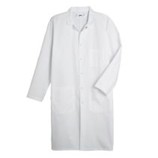 |
65–80% Polyester / 20–35% Cotton | Basic protection from minor chemical splashes and general lab use |
| Flame Resistant (FR) |  |
Inherently FR fabrics (e.g., Nomex), or FR-treated cotton | Protection against flash fires, open flames, pyrophoric materials, and large quantities of flammables |
| Biological Barrier | 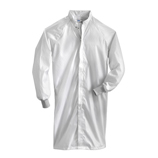 |
Fluid-resistant synthetic material (e.g., 100% polyester with barrier treatment; sealed cuffs) | Protection from biological hazards including bloodborne pathogens and biohazardous agents |
Contacts:
Emily Wakefield
ewakefield@fsu.edu
Assistant Chemical Safety Officer
EHS Main Office
ehs@admin.fsu.edu
850-644-6895


